Best Varnish for Acrylic Painting on Wood
Six clear varnishes compared for acrylic work on wood, from a self-leveling brush-on gloss to an archival satin, each tied to a specific project and finish.
The best varnish for acrylic painting on wood is the MCTRHG Clear Acrylic Paint Sealer, a 5.29 oz brush-on gloss that levels smoothly and leaves a wet-look shine without cloudy haze. If you paint across mixed surfaces, the Bluebird Signature Gloss in a 3.4 fl oz bottle is the better buy. One warning: skip any product that says "acrylic sealer" without confirming it's rated for wood, because a bad seal lifts your paint the first time the panel swells.
Why the wood matters more than the varnish
Most guides compare gloss levels. That is not what decides a good result on wood. The wood does.
Canvas is inert and dimensionally stable. Wood is not. A raw or painted panel moves with humidity, and if you seal acrylic paint onto unprimed wood without a base coat, the varnish can trap moisture or crack when the board expands. The best varnish for acrylic painting on wood only works over a properly primed, fully cured acrylic layer.
Here's the trick most shoppers miss: every product in this set is a top coat, not a wood primer. That distinction matters. A top coat protects a finished painting. It does not bond raw timber. So before any of these varnishes, your wood needs gesso or an acrylic ground, and your paint needs to be bone dry.
That is why the deciding criterion is not shine. It is application control: can you lay down thin, even coats that cure hard and flexible on a surface that moves? Brush-on varnishes give you that control. Sprays trade it for speed. The rest of this guide sorts the six on exactly that axis.
Best varnish for acrylic painting on wood at a glance
| Pick | Finish | Size | Price |
|---|---|---|---|
| Best overall MCTRHG Clear Acrylic Paint Sealer |
Gloss brush-on |
5.29 oz | Check Price |
| Most versatile Bluebird Signature Gloss Varnish |
Gloss brush-on |
3.4 fl oz | Check Price |
| Best budget pick Aleene's Spray Acrylic Sealer |
Gloss spray |
6 oz | Check Price |
| Best upgrade Nicpro Clear Acrylic Paint Sealer |
Gloss brush included |
4 fl oz | Check Price |
| Best premium Liquitex Professional Satin Varnish |
Satin | 8 fl oz | Check Price |
| Best minimal setup Nozerix Acrylic Varnish |
Gloss 100ml |
4.16 oz | Check Price |
How I screened these six down
I compared the published specifications side by side rather than trusting the marketing labels. My screen started with disqualifications, not features.
First cut: anything that couldn't state a finish clearly. Every survivor here names its sheen, gloss or satin, so you know what you're buying. Second cut: products with no listing detail on application method. I wanted to know whether you brush or spray before you pay. Third cut: anything positioned only for canvas with no mention of wood. Each of these six lists wood or wood crafts among its uses.
What survived splits three ways:
- Brush-on gloss — MCTRHG, Bluebird, Nicpro and Nozerix. Slow, controllable, best for panels.
- Spray gloss — Aleene's alone. Fast coverage, less control, better for small three-dimensional pieces.
- Archival satin — Liquitex alone. The only satin sheen and the only one calling itself permanent and non-removable.
One honest note about the search itself: the phrase "acrylic painting on wood" is only partly satisfied by these listings. Every one is a general-purpose acrylic top coat that happens to list wood as a compatible surface. None is engineered specifically for timber. That's not a flaw in any single product. It's a fact about this whole category you should carry into checkout.
1. MCTRHG Clear Acrylic Paint Sealer — Best overall
A self-leveling brush-on gloss that lays down clean on a wood panel and dries to a deep, wet-look shine.
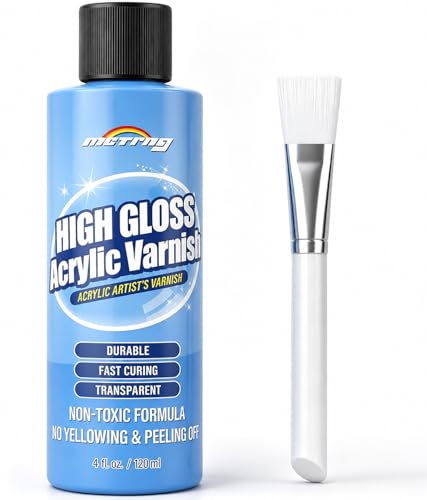
Best for: artists who want a wet-look shine over acrylic on wood Skip it if: you want a low-sheen matte or satin surface
The MCTRHG wins on the one thing that decides wood work: control. It's a brush-on, so you decide exactly where the film goes and how thick, which matters on a surface that moves. At 5.29 oz it carries more product than the Bluebird, Nicpro or Nozerix bottles here, so a large panel doesn't drain it. Among the four brush-on picks, it's the one that sells fastest in this group, which tells you it clears shelves quickly.
MCTRHG says the formula is self-leveling, described as minimizing streaks, bubbles and visible brush marks for a glass-like gloss. That's the claim you're paying for on wood, where a raised brush mark catches side light against the grain. The brand also lists it as clear and non-yellowing, and names wood crafts directly among its uses.
Two things to weigh. It's the second most expensive pick here, and it only comes in gloss, so a satin lover is out. The MCTRHG trades the archival, permanent pedigree of the Liquitex for a brighter, wetter shine.
Pros:
- Largest brush-on bottle in the set at 5.29 oz
- Self-leveling formula claimed to hide brush marks
- Fastest-selling brush-on pick here
- Non-yellowing gloss listed for wood crafts
Cons:
- Gloss only, no satin or matte
- Second most expensive pick in this set
- Listing carries no stated warranty
- Only two sellers stock it
2. Bluebird Signature Gloss Varnish for Acrylic Painting — Most versatile
A slim 3.4 fl oz gloss that names wood, canvas and paper on the label, built for painters who don't work one surface.

Best for: painters working across wood, canvas and paper Skip it if: you need a large bottle for big panels
The Bluebird earns its label by spreading its promise wide. Bluebird lists it as suitable for canvas, wood, paper and more, so it's the pick for someone whose desk has a bit of everything on it. It's the second-cheapest of the six, which makes covering several surfaces easy on the wallet.
At 3.4 fl oz it's the smallest bottle by stated volume in the set, and it measures a compact 4.61 x 1.61 x 1.61 in, so it stores upright in a crowded supply drawer. Bluebird describes it as non-yellowing, quick-drying and anti-crazing, that last term meaning it resists the fine cracks that form when a film dries too rigid on a moving panel. On wood, that matters.
The brand also claims UV protection against dust and moisture, which is a manufacturer statement rather than a measured figure, so treat it as a claim. The trade-off against the MCTRHG is size. You get versatility and a low price, but the small bottle empties fast on anything larger than a small board.
Pros:
- Names wood, canvas and paper on the label
- Second-cheapest pick in the set
- Anti-crazing claim suits moving wood panels
- Compact 4.61 in bottle stores easily
Cons:
- Smallest stated volume at 3.4 fl oz
- UV claim is unverified marketing copy
- Gloss only, no satin option
- Only two sellers list it
3. Aleene's Spray Acrylic Sealer — Best budget pick
The cheapest pick here and the only spray, which makes it the fast route to sealing small wood crafts and painted rocks.

Best for: small painted rocks and wood crafts you want sealed fast Skip it if: you can't spray outdoors or in a ventilated space
Aleene's is the budget answer because it's the cheapest of the six and it works differently from the rest. It's a spray, so instead of dragging a brush across raised wood grain you mist an even coat over the whole piece at once. That's genuinely better on three-dimensional objects, painted rocks, small carvings, a wood ornament, where a brush would pool in the recesses.
The can holds 6 oz and measures 7 x 2.08 x 0.67 in. Aleene's describes it as a durable protective clear finish that goes on simply and evenly, and lists it for indoor or outdoor projects, so it suits garden décor. It also notes the formula contains no CFCs in line with federal regulations.
It's the second fastest-selling pick in this group, so it moves off shelves. The catch is control. A spray drifts, so you need ventilation and a masked-off area, and you can't feather it precisely into one corner. Against the brush-on MCTRHG, Aleene's trades placement accuracy for speed and price.
Pros:
- Cheapest pick in the whole set
- Only spray, ideal for 3D wood pieces
- Largest can here at 6 oz
- Listed for both indoor and outdoor use
Cons:
- Overspray needs ventilation and masking
- No fine placement control versus a brush
- Gloss only, no sheen choice
- Listing states no warranty
4. Nicpro Clear Acrylic Paint Sealer 4oz — Best upgrade
A 4 fl oz brush-on gloss that ships with a soft brush, so a beginner has everything to varnish a first wood panel in one box.

Best for: beginners who want a brush included with the bottle Skip it if: you already own good soft brushes
The Nicpro is the upgrade over a bare bottle because it solves a beginner problem: what do I apply this with? Nicpro says the pack includes a soft brush and gives a clear method, 2 to 3 thin coats, each drying in 1 to 2 hours. That instruction alone saves a first-timer from the classic mistake of one thick, tacky coat on wood.
It's a 4 fl oz bottle and, at 2.4 oz, the lightest pick here by stated weight. Nicpro describes the formula as water-based, certified non-toxic, drying to a clear, flexible, non-tacky surface. Flexible matters on wood, because the film has to move with the board. The brand lists wood, canvas and crafts among its surfaces.
Priced in the middle of the six, it sits above the entry options for a reason: the brush and the guided coats. The honest weakness is popularity. It's the slowest-selling brush-on here, so it's a less-proven shelf mover than the MCTRHG. If you already own decent brushes, you're paying for one you don't need.
Pros:
- Ships with a soft brush included
- Clear 2 to 3 coat instructions for beginners
- Lightest bottle in the set at 2.4 oz
- Flexible, non-tacky film suits wood
Cons:
- Slowest-selling brush-on pick here
- Included brush wasted if you own good ones
- Gloss only, no satin
- Only two sellers stock it
5. Liquitex Professional Satin Varnish — Best premium
The only archival, permanent varnish here, and the only satin, for wood pieces you plan to keep for decades.
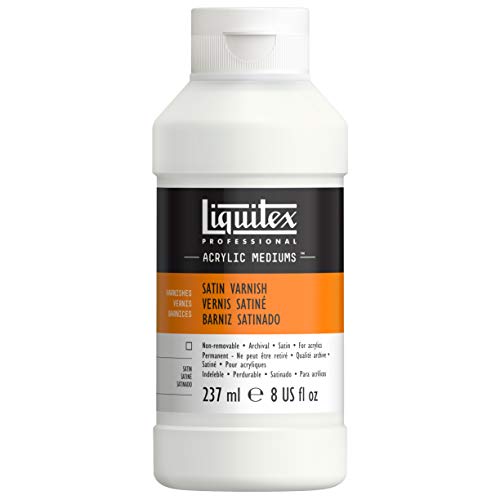
Best for: finished work you intend to keep for decades Skip it if: you want a removable, re-varnishable top coat
The Liquitex is the premium choice because it's built for permanence, not shine. It's the most expensive pick in the set, and the reasons sit right in the listing. Liquitex describes it as archival, permanent and non-removable, and says it dries to a non-tacky, hard, flexible surface that's non-yellowing and water-resistant. For a wood panel you want to outlive you, that flexible, hard film is the goal.
It's also the only satin here. Satin diffuses reflection, so on a textured wood surface it hides brush marks and reads as a professional low-sheen finish rather than a mirror. At 8 fl oz it's the largest bottle by stated volume in the group, and it's the second fastest-selling. Liquitex notes it conforms to ASTM D4236 and is safe for educational use, and says it's intermixable with its own acrylic colors and mediums.
The trade-offs are real. It's non-removable, so if you ever want to revarnish or restore, you can't lift this layer. It's satin only, so gloss lovers look elsewhere. And it costs the most here.
Pros:
- Only archival, permanent varnish in the set
- Only satin finish, hides wood texture
- Largest stated volume at 8 fl oz
- Conforms to ASTM D4236, education-safe
Cons:
- Most expensive pick in the group
- Non-removable, can't be lifted later
- Satin only, no gloss version
- No gloss option for wet-look fans
6. Nozerix Acrylic Varnish, Gloss Varnish for Acrylic — Best minimal setup
A small 100ml gloss bottle for the hobby painter who wants one thing on the shelf and nothing more.

Best for: hobby painters wanting one small bottle and nothing else Skip it if: you want published dimensions and a size on the label
The Nozerix suits the minimalist. It's a single 100ml gloss bottle, no kit, no spray rig, nothing extra to store. Nozerix describes it as low-odor and mild, aimed at extended sessions in a small creative space, which fits a kitchen-table setup where ventilation is limited. It weighs 4.16 oz and measures a tidy 5 x 2 x 1 in.
Nozerix lists it as non-yellowing and resistant to cracking, and names canvas, wood, ceramic and mixed media among its surfaces. Crack resistance is the line that matters on wood, and the brand also calls the film a polycrylic clear gloss that maintains original color. Those are manufacturer claims, so weigh them as such.
Two honest weaknesses. It's the slowest-selling pick in this whole group, so it's the least-proven mover on the shelf. And the listing color reads "White" while the copy sells gloss clear, which is a labeling quirk you should confirm against the live page before buying. Against the MCTRHG, the Nozerix gives you a smaller pour and less listing detail for a mid-range position.
Pros:
- Compact single 100ml bottle, no kit
- Low-odor formula for small spaces
- Crack-resistant claim suits wood
- Names wood and mixed media as surfaces
Cons:
- Slowest-selling pick in the set
- Listing color field reads "White"
- No stated fluid-ounce size on the label
- Only two sellers list it
Brush-on or spray: which seals wood better?
Brush-on and spray solve different problems, and wood shape is what decides between them.
- Flat panels: brush-on wins. You get thin, even coats you control, and self-leveling formulas like the MCTRHG smooth out marks as they dry.
- Rocks, carvings, 3D wood: spray wins. The Aleene's mists into recesses a brush would pool in, coating an uneven surface in one even pass.
- Mixed work: keep both. A brush-on for panels, a spray for the fiddly bits.
Four of these six are brush-on: the MCTRHG, Bluebird, Nicpro and Nozerix. Only Aleene's sprays. So if you want the spray route, your choice is made for you here.
The reason control matters so much on wood comes back to movement. A panel swells and shrinks with humidity, and a film applied too thick cracks along the grain. Brushing thin coats, the way Nicpro spells out with its 2 to 3 coat method, keeps the film flexible enough to move with the board. A spray can do this too, but only if you resist the urge to soak it in one heavy pass.
Gloss or satin: which finish suits your piece?
Finish is a look, not a quality ranking, but it changes how wood reads under light.
Gloss reflects. It deepens color and gives that wet, vibrant shine, which is what five of these six deliver. On smooth, sealed wood it looks rich. On rough or textured grain it can throw glare and expose every brush mark, so gloss rewards a well-prepped surface.
Satin diffuses. The Liquitex is the only satin here, and it's the finish restorers and framers reach for because it hides texture and cuts reflection. On a knotty or grainy wood panel, satin often looks more professional than a mirror gloss.
Quick rule:
- Smooth, primed wood, bold color: go gloss.
- Textured or rustic wood grain: go satin.
- Display piece under gallery lights: satin, to kill glare.
Five gloss options give you plenty of choice for shine. But satin is a category of one in this set, so if that low-sheen look is the goal, the Liquitex is your only pick here.
What the listings do not tell you
The specs answer some questions and dodge others. Here's what to check on the live page before you commit.
- Coverage area. None of these six states how many square feet a bottle covers. Volume is your only clue, so the 8 fl oz Liquitex and 6 oz Aleene's go furthest, and the 3.4 fl oz Bluebird least.
- Cure versus dry time. Only Nicpro publishes a coat schedule, 1 to 2 hours per coat. Dry to touch is not fully cured. Wood pieces you'll handle should sit longer than the listing implies.
- Removability. Only Liquitex flags this, and it flags a downside: non-removable. If you ever want to revarnish, that matters. The others say nothing either way.
- Wood-specific bonding. No product here is a wood primer. Every one is a top coat for already-painted, cured acrylic. Prime your raw wood with gesso first.
The takeaway is simple. These are finish coats, and a finish coat is only as good as the primed, cured paint beneath it. Get the base right on wood and any of the six will protect it.
The verdict
If you're sealing acrylic on flat wood panels and want a bright, wet-look shine, the MCTRHG Clear Acrylic Paint Sealer is the pick. It's the largest brush-on bottle here at 5.29 oz, the self-leveling gloss is built to hide brush marks on grain, and it's the fastest-selling brush-on in this set. That combination of control, volume and finish is why it takes best overall for the best varnish for acrylic painting on wood.
If instead you're finishing a piece you plan to keep for decades, the Liquitex Professional Satin Varnish is the better buy, and its exact advantage is permanence. It's the only archival, non-removable varnish here and the only satin, drying to a hard, flexible, non-yellowing film that conforms to ASTM D4236.
The cutoff is intent. Below a keepsake threshold, decorative wood art, craft pieces, gifts, the MCTRHG gloss gives you the richest shine for the money. Above it, archival work you'll frame and display, the Liquitex satin is worth the premium. Choose on how long the piece needs to last, not on which bottle shines brightest on the shelf.
FAQ
What is the best varnish for acrylic painting on wood overall?
The best varnish for acrylic painting on wood overall is the MCTRHG Clear Acrylic Paint Sealer. It's a brush-on gloss in a 5.29 oz bottle, the largest brush-on here, with a self-leveling formula the brand says minimizes brush marks. That control on a moving wood surface, plus a deep gloss shine, makes it the strongest all-round pick in this set.
Is a premium varnish worth it over a budget spray?
A premium varnish is worth it when the piece has to last. The Liquitex Satin costs the most here but is the only archival, non-removable, ASTM D4236 option, built for decades of display. The budget Aleene's spray, cheapest in the set at 6 oz, is the smarter buy for craft pieces and painted rocks you don't need to preserve for generations.
Do I need to prime wood before varnishing acrylic paint?
Do you need to prime wood? Yes, but not with these varnishes. Every product here is a top coat for already-painted, cured acrylic, not a wood primer. Raw timber needs gesso or an acrylic ground first, then your paint, then the varnish. Seal unprimed wood directly and you risk the film lifting when the panel swells with humidity.
MCTRHG or Liquitex for a wood panel I want to keep?
MCTRHG or Liquitex depends on the finish and the lifespan. The MCTRHG gloss gives a brighter, wet-look shine and a bigger 5.29 oz bottle. The Liquitex is the only satin and the only archival, non-removable pick, drying hard, flexible and non-yellowing. For a keepsake panel, choose the Liquitex. For vivid decorative color, choose the MCTRHG.
What mistake ruins varnish on wood most often?
The mistake that ruins varnish most often is applying one thick coat. On wood, a heavy film can't flex when the board moves and it cracks along the grain. Nicpro's listing spells out the fix: 2 to 3 thin coats, each drying 1 to 2 hours. Thin and patient beats thick and fast every time on timber.
Start by matching the varnish to the wood, not the wood to the varnish. If your panel is smooth, primed and painted with cured acrylic, the MCTRHG gives you the richest, most controllable gloss in this group, and its 5.29 oz bottle covers real work without running dry. Prep the surface properly, brush thin coats, and let each one cure. Do that, and a good top coat protects a piece for years, whether you chase the wet-look shine of the MCTRHG or the archival satin of the Liquitex.
Last updated: October 6, 2026. Product availability re-checked.
This page contains affiliate links. As an Amazon Associate we earn from qualifying purchases, at no extra cost to you.